


Before we recommend anything, we take the time to get to know you, your goals, and your questions.
Trying a new aesthetic practice can feel unfamiliar, especially if you have never had an injectable or skin treatment before. Here is what to expect, from booking to aftercare.
1 Before you arrive
Once you book, you will receive a confirmation along with a few intake forms to complete. These cover your health history, current medications, allergies, and any past aesthetic treatments. Filling them out ahead of time means more of your appointment is spent talking with your provider instead of on paperwork.

A few things that help your visit go smoothly:
Arrive about 10 minutes early so you have time to check in and get settled.
Bring a list of your medications and supplements, including vitamins and anything you take occasionally.
Come with a clean face if you can, or plan to remove makeup in the treatment area if you are hoping to be treated at your first visit.
Bring your questions. Write them down if that helps. No question is too small.
If you have an upcoming event, like a wedding or vacation, mention it when you book. Some treatments need time to settle, and timing matters.
2 Your Consultation
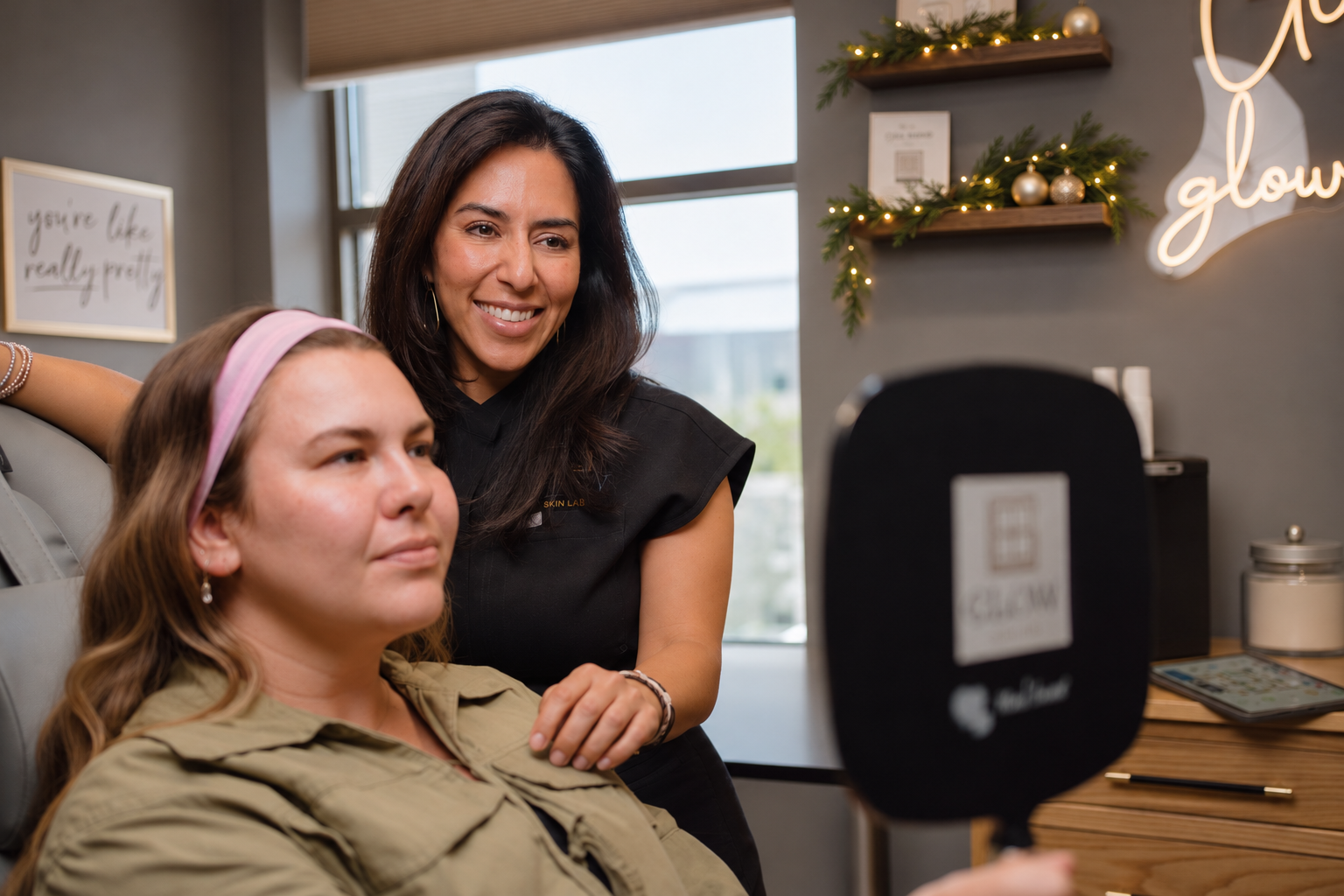
Every first visit includes a one-on-one consultation with one of our Board Certified Nurse Practitioners, Lindsay Sebek or Mandy Albright.
Your provider will review your health history with you. This step is important. Certain medications, health conditions, and life stages (such as pregnancy or breastfeeding) can affect which treatments are a good fit, or whether now is the right time.
Then the conversation turns to you:
What brought you in, and what you would like to change or maintain
What you have tried before and how it went
How much downtime fits your schedule
What a natural-looking result means to you
Our goal is to help you look like a refreshed version of yourself, not someone else.
3 Your treatment plan and pricing
If a treatment is right for you, your provider will walk you through a recommended plan before anything happens. You will know what is being suggested, why, and what it costs.

Your provider will also explain:
What results are realistic for you, and how long they typically last
Common side effects and how they are managed
What the first few days after treatment usually look like
Whether a single visit or a series makes more sense for your goals
Everyone responds to treatment differently, so we talk about likely results, not promises.
There is no pressure to decide on the spot. Many first-time patients go home, think it over, and come back. If you are ready to move forward, you will review and sign a consent form first. It is there to make sure you understand the treatment and have had every question answered.
4 If you are treated at your first visit

Many patients can be treated the same day, once your provider has confirmed the treatment is medically appropriate for you.
We will take a few photos for your private medical chart to track your progress. They are never shared without your permission.
After your skin is cleansed, your provider may offer numbing cream or ice for comfort. Most people describe injectables as a quick pinch or pressure, and your provider will talk you through each step.
Treatment times vary, and your provider will give you an estimate during your consultation.
5 After your visit
You will receive aftercare instructions specific to your treatment. These cover things like what to avoid for the first day or two and what is normal to notice as your results settle.



We will also talk about follow-up. For many treatments, your provider will want to see you again in a couple of weeks to check how you are healing and how your results are coming along.
If you have a question or something does not feel right after your appointment, please reach out. You can call us at 210-510-0777 or email care@glowskinlabsa.com. If something feels urgent, call immediately so you can speak directly with your treating provider. They may want to see you, or they can give you guidance and reassurance over the phone.
Written by: Lizbeth Perez, Patient Coordinator
